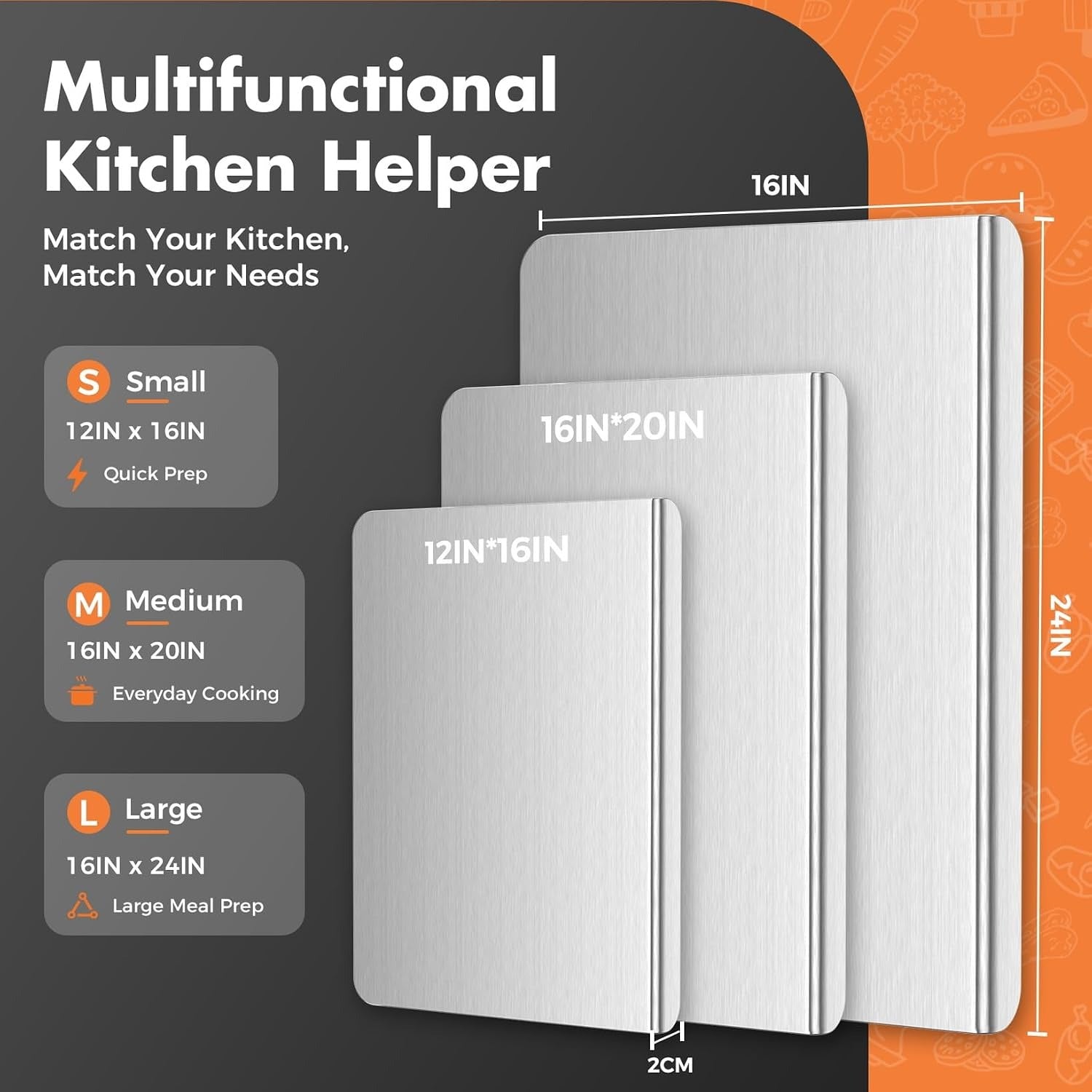
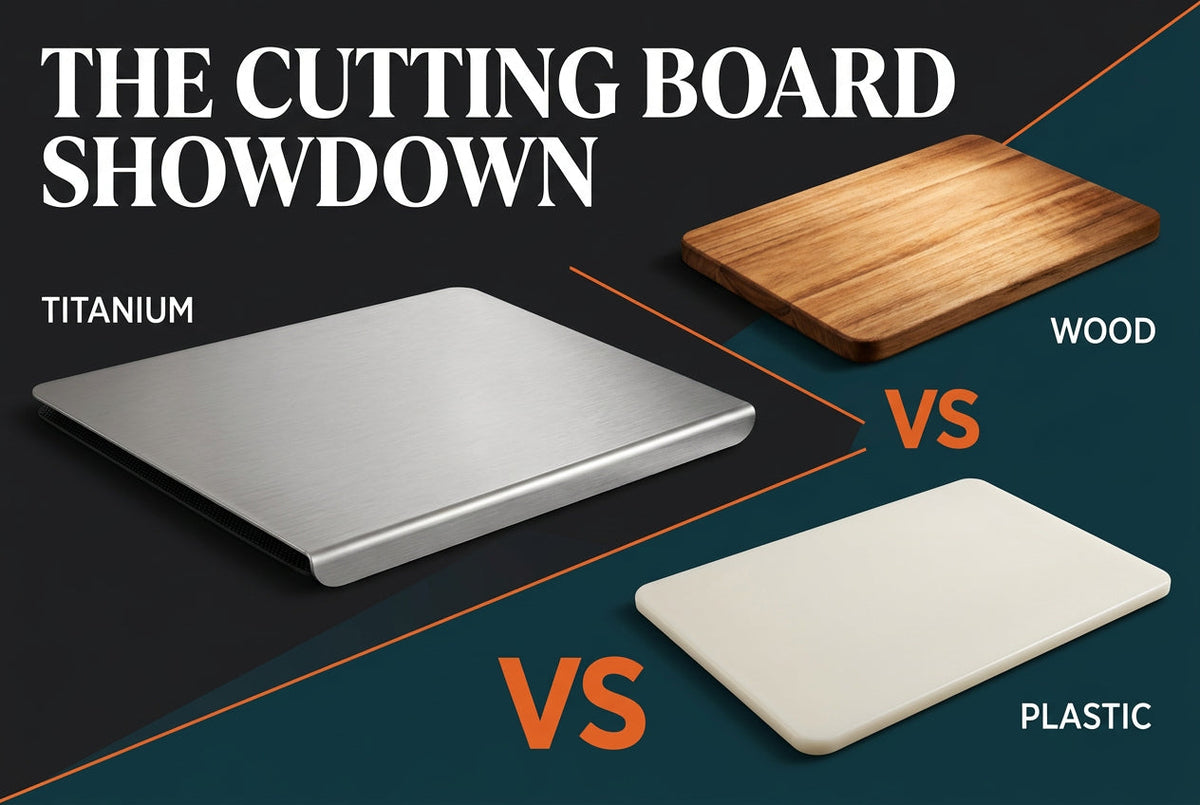
The cutting board is the most used tool in your kitchen, and also one of the most overlooked. It touches raw chicken, fresh vegetables and everything in between. The material you choose affects how clean it stays, how long it lasts and how it treats your knives.
Here is how the three most popular options compare.
1. Titanium Cutting Boards
Pros
-
Non-porous surface: Liquids and odors like garlic, onion and fish don’t soak in.
-
Easy to clean: A quick wash and it’s ready, with no deep grooves to trap food.
-
Durable: It doesn’t crack, warp or split, even with daily use.
-
Slim and light: It’s easy to store and handle.
Cons
-
Harder on knives: Metal surfaces can dull blades faster than wood or plastic. Use sharp knives and a light hand.
-
Can feel noisy: Chopping on metal sounds louder.
-
Higher price than a basic plastic board.
Best for: People who want a low-maintenance board that stays odor-free and cleans in seconds.
2. Wood Cutting Boards
Pros
-
Gentle on knives: Wood is forgiving, so blades stay sharper longer.
-
Natural look: It works as a serving or charcuterie board too.
-
Can be refreshed: Light scratches can be sanded out and the board re-oiled.
Cons
-
Needs care: It must be hand-washed, dried right away and oiled from time to time.
-
Can absorb moisture and odors if neglected.
-
Can warp or crack if soaked or put in the dishwasher.
-
Heavier and bulkier than other options.
Best for: Home cooks who love the feel of wood and don’t mind regular upkeep.
3. Plastic Cutting Boards
Pros
-
Affordable: The cheapest option, so it’s easy to own more than one.
-
Dishwasher-friendly: Most plastic boards can go straight into the dishwasher.
- Light and easy to store.
Cons
-
Deep knife grooves: Over time, cuts in the surface can hold food and stains and are harder to clean.
-
Needs replacing: A heavily scarred board should be thrown out.
- Can stain and hold odors.
Best for: Budget-friendly everyday use and raw meat prep, as long as you replace it when it gets worn.
Quick Comparison
|
Titanium |
Wood |
Plastic |
| Absorbs odors and stains |
Very low |
Medium |
Medium |
| Knife-friendliness |
Lower |
Highest |
Good |
| Maintenance |
Very easy |
High |
Easy |
| Dishwasher safe |
Check product label |
No |
Usually yes |
| Lifespan |
Long |
Long with care |
Shorter |
| Price |
Higher |
Mid to high |
Lowest |
So, Which One Should You Buy?
-
Want easy cleaning and no odors? Choose titanium.
-
Want to protect your knives and love natural materials? Choose wood.
-
Want the cheapest, simplest option? Choose plastic.
Many kitchens end up using more than one. A good setup is one board for raw meat and one for fruit and vegetables, which also keeps food safer.
Care Tips for Any Cutting Board
-
Wash after every use with warm, soapy water.
-
Dry fully before storing so moisture doesn’t build up.
-
Use separate boards for raw meat and ready-to-eat foods.
-
Remove strong odors with a rub of lemon and salt, or a baking soda paste.
-
Replace worn boards. Deep grooves are hard to clean properly.