Weeknight cooking often starts with the same jobs: chopping onions, peeling vegetables, measuring ingredients and finding containers. When you repeat those tasks for every meal, even a simple dinner can feel like a project.
Meal prep doesn’t have to mean spending your whole Sunday cooking. A few versatile tools and a short, repeatable routine can make it easier to get started. Here’s how to choose tools that earn their place in your kitchen and put them to work.
1. Use a Vegetable Chopper for Repetitive Prep
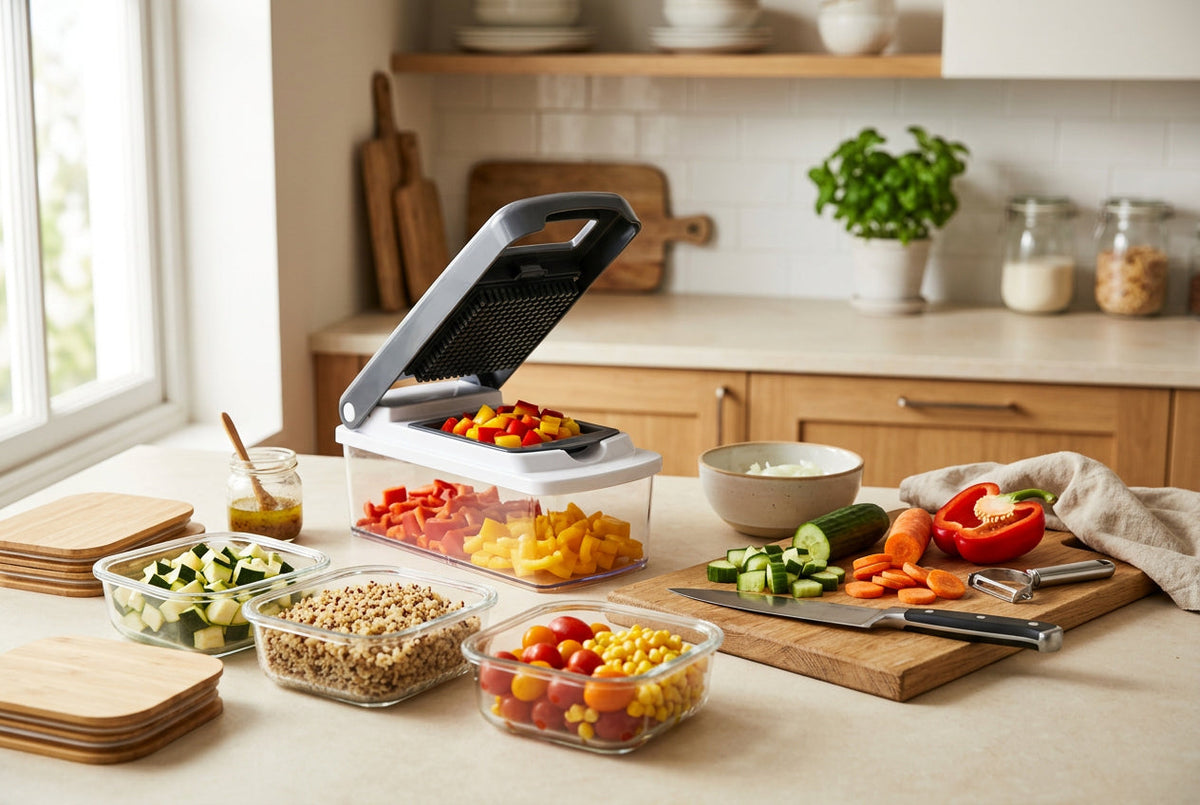
If several meals start with chopped vegetables, a manual chopper can help you tackle those repeated tasks in one session. Dice onions for a sauce, prepare peppers for wraps or chop cucumber for a salad.
Choose the right style: A press-down grid chopper suits even-sized pieces, while a pull-cord chopper is useful for a finer, less uniform chop. Results depend on the ingredients, blade and how you use it.
- Cut ingredients into pieces that fit comfortably before loading.
- Work in small batches rather than forcing an overfilled container.
- Follow the tool’s instructions for hard vegetables and avoid ingredients it isn’t designed to handle.
- Check how easily the blade and food-contact parts come apart for cleaning.
Best use: Preparing the same ingredient for several recipes. Keep a knife nearby for jobs that need more control.
2. Keep a Good Knife and a Stable Cutting Board
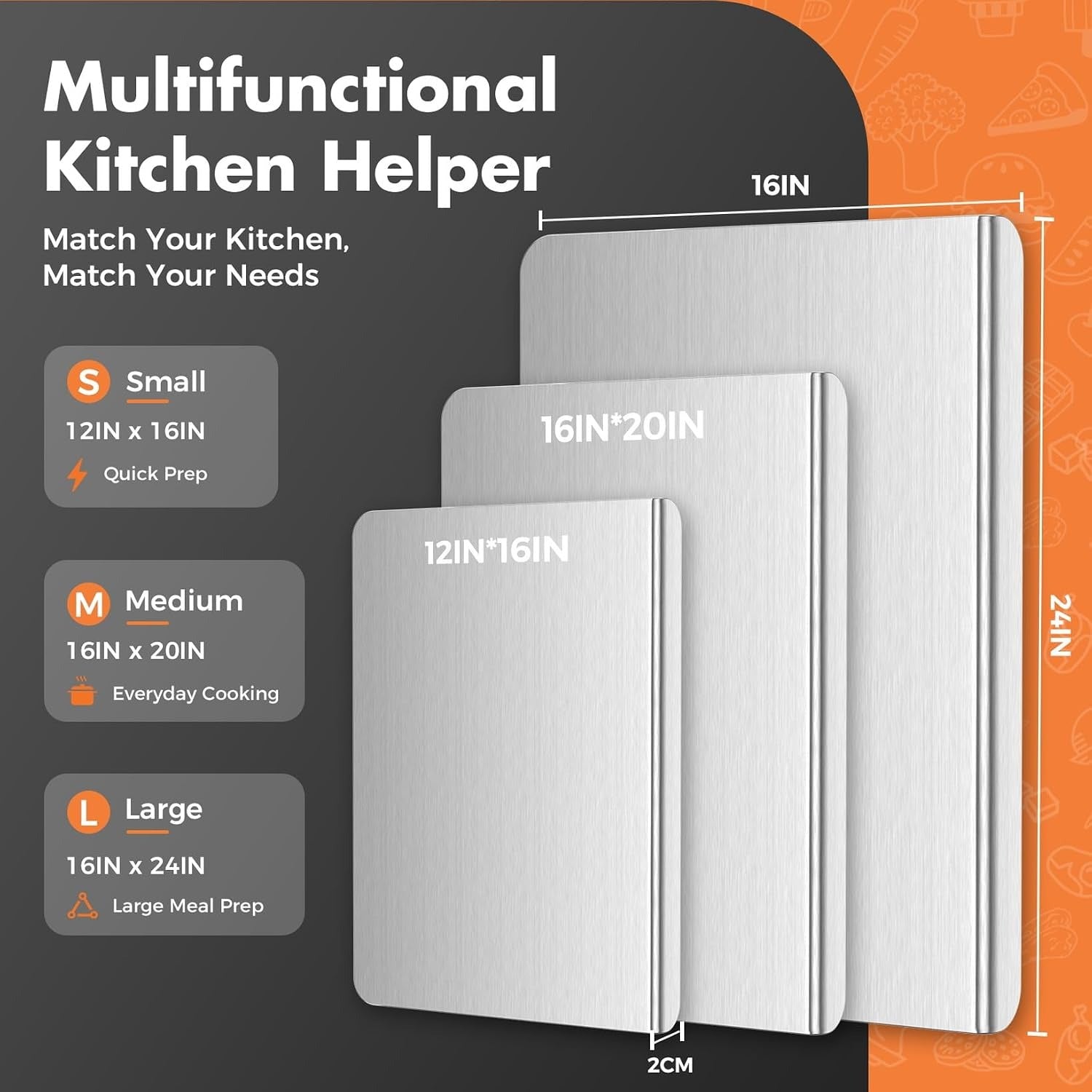
A chopper is helpful, but it won’t replace every cutting task. A comfortable chef’s knife and a board that stays steady are still useful for trimming produce, slicing larger ingredients and cutting pieces to fit your other tools.
Choose a board with enough working space for your usual meals. Before starting, set out a bowl for prepared ingredients and another for scraps so the cutting surface stays clear.
Time-saving habit: Finish preparing one ingredient before moving to the next instead of switching between chopping, searching and tidying.
3. Match Slicers, Peelers and Graters to What You Cook
The most useful kitchen tool is one that solves a job you actually repeat. You don’t need every gadget to make meal prep easier.
-
Vegetable peeler: Handy if carrots, potatoes or other peeled vegetables feature often in your meals.
-
Box grater: Useful for shredded carrots, cabbage and cheese without setting up a larger appliance.
-
Mandoline slicer: Helpful for consistent thin slices. Always use the supplied hand guard and follow the safety instructions; don’t push the last small piece through by hand.
-
Kitchen shears: Useful for snipping herbs and other suitable ingredients. Choose a pair that is easy to clean.
Before buying: Think about setup, washing and storage as well as cutting. A tool that takes longer to clean than the job itself may not suit your routine.
4. Make Mixing and Measuring Less Messy
Bowls, measuring spoons and a small whisk may not look exciting, but they help keep prep moving. Use a roomy bowl to toss vegetables, mix a dressing in a small jar and measure seasonings before your hands get busy.
Keep these everyday tools together in an easy-to-reach spot. If you often make the same dressing or seasoning mix, save the recipe somewhere visible so you aren’t searching for it every time.
5. Choose Containers That Fit Your Routine
Prepared ingredients are easier to use when you can see what’s available. Choose food-storage containers with secure lids, practical portion sizes and shapes that fit your shelves.
- Use smaller containers for dressings, toppings and snacks.
- Keep wet ingredients separate from crisp salad ingredients until serving.
- Label containers with their contents and preparation date.
- Check the manufacturer’s instructions before using containers in a microwave, freezer or dishwasher.
Plan storage around each recipe and ingredient rather than assuming every meal will keep for the same length of time. Follow reliable food-safety guidance for cooling, refrigeration and reheating.
A Simple Prep Session to Try
Start with two or three meals that share ingredients. For example, peppers and onions could work in a rice bowl, a wrap and a quick skillet dinner.
-
Check what you have. Look through your fridge and pantry before writing a shopping list.
-
Set up your workspace. Gather your board, knife, chopper, bowls and containers before you begin.
-
Prep shared ingredients together. Wash produce as appropriate, then chop the amounts needed for your planned meals.
-
Keep components flexible. Separate vegetables, sauces and toppings so you can combine them differently.
-
Store and tidy promptly. Put ingredients away appropriately and clean tools according to their instructions, taking care around blades.
Buy Fewer Tools, Use Them More
You don’t need a drawer full of gadgets to get ahead. Start with a knife, a stable board, a few containers and one tool that addresses your biggest prep bottleneck. If you chop vegetables every day, that might be a chopper. If you mostly make salads, a grater or guarded slicer may be more useful.
The goal isn’t perfectly matching meal boxes. It’s having a few ingredients ready when you need them, less clutter on the counter and a simpler path from “what’s for dinner?” to cooking.