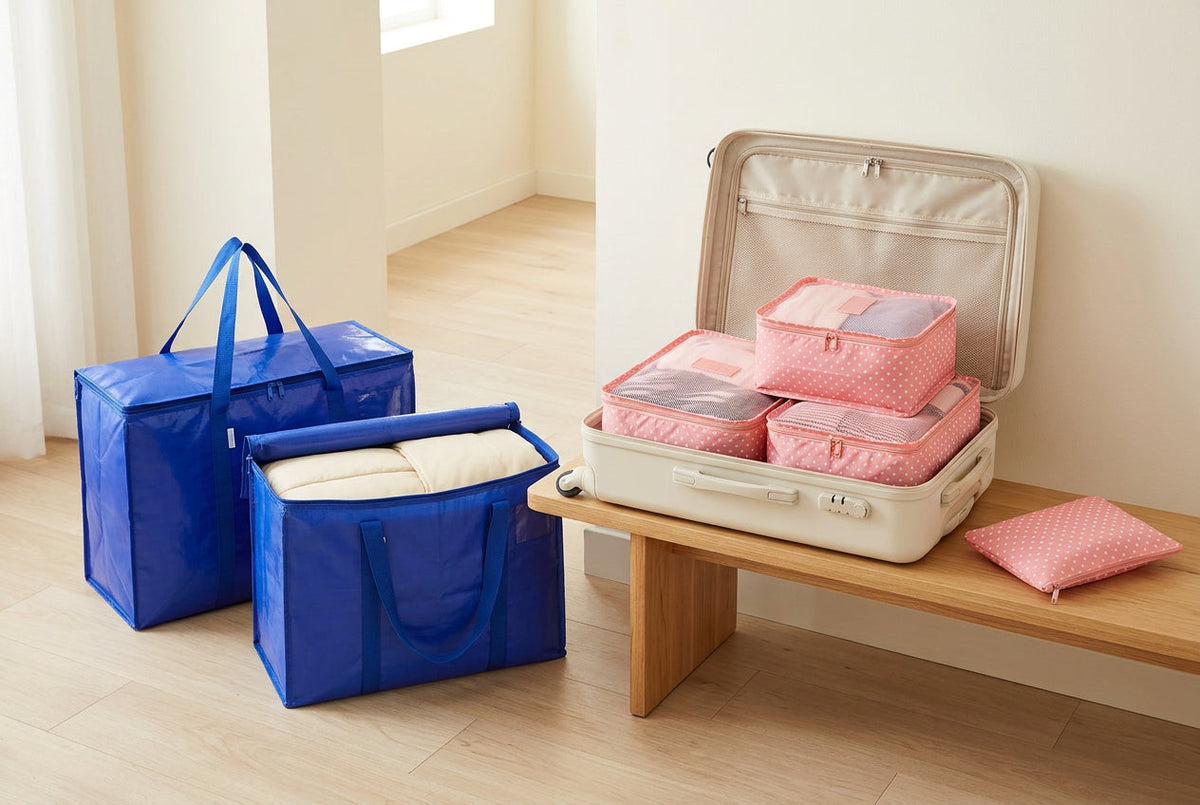
Packing is easier when everything has a place before you zip the bag. Whether you’re moving into a new home or getting ready for a weekend away, the aim is the same: keep belongings organized, make them manageable to carry and find what you need without unpacking everything.
Moving bags and packing cubes can work together, but they serve different purposes. Here’s how to choose between them and build a packing routine that makes unpacking easier, too.
Moving Bags vs. Packing Cubes: What’s the Difference?
Moving bags are larger bags suited to grouping bulky, lightweight belongings such as clothing, bedding and towels. Their usefulness depends on their dimensions, handles, closures and stated load limit.
Packing cubes are smaller zippered organizers that separate items inside a suitcase, backpack or larger bag. They’re useful for sorting clothing by category, outfit or person.
Think of a moving bag as the outer carrier and packing cubes as the compartments inside it. You can use either on its own or combine them when smaller items need to stay together.
1. Sort Before You Start Packing
A bigger bag won’t solve the problem of packing things you don’t need. Lay out your belongings and decide what should actually come with you.
-
For a move: Sort one room at a time. Separate what you’ll keep, donate, recycle or discard as appropriate.
-
For a trip: Plan around the weather, activities and laundry options. Choose pieces you can wear in more than one combination.
-
For either: Put must-have items aside before filling the main bags.
Make a short checklist as you sort. It’s easier to spot a missing charger or extra pair of shoes on a list than at the bottom of a packed bag.
2. Choose Bags for the Contents, Not Just the Capacity
Before choosing a moving bag, check its measurements against what you plan to pack and where the bag needs to fit. Look at handle construction, zipper access and the manufacturer’s carrying guidance.
Use large bags for light, bulky items rather than filling them with dense belongings. Books, tools and similar items can become difficult to lift long before a bag looks full. Break them into smaller, suitable containers.
For packing cubes, compare their dimensions with your luggage’s usable interior. A matching set is only useful if the pieces fit your bag and the way you pack.
Remember: A fabric bag or cube is not protective packaging for glassware, dishes or delicate electronics. Pack fragile items separately with suitable cushioning and support.
3. Pack a Move by Room and Unpacking Priority
Keep items headed to the same room together. One bag might hold bedroom linens, another bathroom towels and another seasonal clothing. Avoid filling spare gaps with unrelated belongings you’ll struggle to find later.
- Place clean, dry textiles together.
- Use smaller pouches or cubes to contain loose clothing accessories.
- Keep closures free of trapped fabric and avoid forcing zippers shut.
- Label each bag with its destination room and a brief description.
A label such as “Bedroom: sheets and pillowcases, open first” is more helpful than “Soft items.” Put the label somewhere you can see when bags are lined up.
4. Pack a Trip by Category or Outfit
Choose one packing-cube system and use it consistently. Sorting by category works well if you like to choose outfits each day. Sorting by outfit can suit short trips with a planned schedule.
-
Category system: One cube for tops, one for bottoms and a smaller one for underwear and socks.
-
Outfit system: Group the clothes for each day or activity together.
-
Shared-luggage system: Give each person a distinct cube color or label.
Roll soft casual clothes if that fits your luggage well, and fold structured items where needed. Neither method is a universal space-saving trick; fabric, garment shape and bag dimensions all matter.
Regular packing cubes mainly organize. Compression styles can reduce the bulk of some soft clothing, but they don’t reduce weight or increase your luggage allowance. Check your carrier’s current baggage rules before traveling.
5. Keep an Essentials Bag Separate
Pack the things you’ll need first in a small bag that stays accessible, rather than burying them inside your main load.
For moving day: Include a change of clothes, basic toiletries, phone charger, important documents and bedding you’ll need that night. Keep valuables and necessary medication with you.
For travel: Keep identification, travel documents, necessary medication, a charger and other journey essentials within reach. Check applicable transport and destination requirements for restricted items.
The test is simple: if the rest of your bags were temporarily out of reach, could you manage the next few hours comfortably?
6. Keep Clean, Used and Spill-Prone Items Apart
Give shoes and used laundry their own washable bag or compartment. Pack toiletries in a suitable separate pouch and secure their closures. Don’t assume a moving bag or packing cube is leakproof or waterproof unless its specifications say so.
Don’t leave damp towels or wet clothing sealed with dry belongings. Dry them appropriately before storage, and clean and dry bags according to their care instructions before putting them away.
A Quick Packing Routine
-
Make a list. Group belongings by room, clothing category or planned outfit.
-
Set essentials aside. Pack your first-use items separately.
-
Fill smaller organizers. Keep each cube or pouch focused on one category.
-
Load the main bag. Arrange contents so the load is balanced and items you need sooner remain accessible.
-
Check the closure and weight. Repack if a zipper needs force or the load is awkward to handle. Follow the bag’s stated limits.
-
Label and review. Note what’s inside and check your list before leaving.
Make Unpacking Part of the Plan
At your destination, start with essentials rather than opening every bag at once. During a move, take labeled bags directly to their rooms. On a trip, keep cubes grouped in your suitcase or transfer them to a clean drawer or shelf.
The best packing setup isn’t the one with the most bags. It’s the one that makes your belongings easy to carry, easy to find and easy to put away. Start with the sizes you need, keep categories simple and leave out anything that doesn’t earn its place.